
Franklin County Previous Residents Sources
Work backward by source and date. The Auditor's current parcel record identifies the land; the Recorder supplies a recorded party and legal-description trail; Columbus directories provide a dated occupant entry; maps and permits place the building in context. None is a complete list of past residents. An owner can use a different mailing address, and a directory occupant need not be the owner. The table keeps the evidence types apart while giving an address-history search a realistic order.
| Source | Years | Where | What it can show |
|---|---|---|---|
| Recorder deeds and archives | Books from 1803; archive 1804–1913; deed index from 1914 | Recorder Cloud Search, legacy route, or counter | Parties, dates, and a legal-description chain |
| Columbus City Directories | Held back to 1841; street section begins 1911 | Columbus Metropolitan Library Main Library and digital collection | Annual city occupant/address entries |
| Sanborn and other maps | Sanborn: 1887, 1891, 1901, 1921, and 1921–51 | Main Library, online, microfilm, and hard copy | Lot and building context, not occupants |
| Federal census | Public schedules through 1950 in 2026 | National Archives and genealogy access points | A dated household snapshot, not yearly occupancy |
| Columbus permits | About 1920 onward | BZS Citizen Access and BZS Records | Construction, change, and address-history leads |
For the Recorder's historical path, consult its Public Records Search information before treating a search result as a complete title history. The historical-search guide shown below is a useful reminder that older work often requires an index page and a book reference.
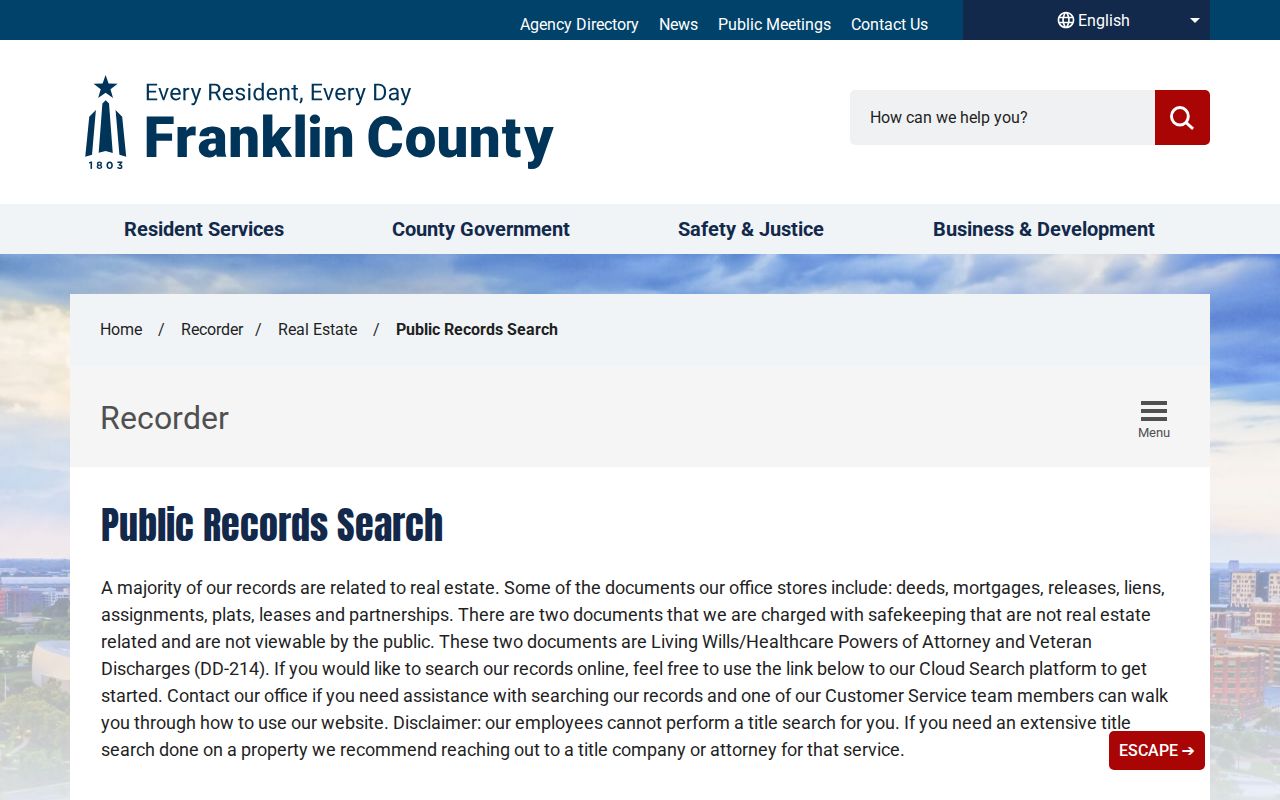
The Recorder route documents instruments. It does not by itself establish every person who occupied an address between transfers.
Start a Franklin County Past Residents Trail
Begin at the Franklin County Auditor Property Search with the street address, then save the parcel ID, site address, current owner, subdivision or condominium wording, legal description, and recent transfer clue. A parcel is the county's identified piece of land. Its site address says where it is; its owner mailing address is simply where correspondence goes. The durable handoff to the Recorder is the parcel's legal description, not a modern street string. Franklin County's Recorder does not index street addresses as an ordinary search field.
A parcel can also contain a range or more than one building address. Compare the site, building, and parcel information before treating results as separate lots. If a street number appears inconsistent, check the parcel's city, village, township, and tax-district fields. Inside Columbus, certified addressing belongs to BZS GIS; another Franklin County municipality or township can be the address authority outside Columbus. That boundary check prevents a changed postal or street label from breaking an otherwise sound past-residents trail.
- Parcel ID
- The Auditor's identifier for a tract or property record. It connects the map and parcel detail.
- Situs address
- The physical location of the land or building, distinct from an owner's mailing address.
- Legal description
- The subdivision, lot, metes-and-bounds, or similar land description used to match a Recorder document.
- Grantor / grantee
- The person transferring an interest and the person receiving it on a recorded instrument.
Note: A current Auditor record is an inventory lead, not proof of historical ownership or a full household.
Trace Franklin County Deeds Backward
The Franklin County Recorder Cloud Search is most useful after the parcel step. Its Quick Search accepts a grantor or grantee, subdivision, document type, or document number, with a recorded-date range and index-only or OCR scope. Advanced fields also include party names, grantor, grantee, book, volume, page, subdivision legal, and freeform legal. Search the present owner as grantee, locate a candidate acquisition, and compare its legal description to the parcel record before proceeding.
- Record the parcel ID and legal-description wording from the Auditor result.
- Find the current owner's acquisition as a grantee, using a date range or document type when needed.
- Read the instrument for the prior grantor, recorded date, and legal description.
- Search that prior grantor as a grantee to locate the earlier acquisition, then repeat while the land description remains continuous.
- Pause for a plat, split, consolidation, or condominium change. Follow the parent parcel or plat instead of assuming the street address stayed the same.
Recorder staff can help with the site and historical indexes but do not conduct a title search. When an online image or old link is incomplete, use the counter or office contact for book/index assistance. The Recorder is at 373 S. High Street, 18th Floor, Columbus, with public hours Monday through Friday, 8 a.m. to 4 p.m.
The updated Recorder search guide illustrates the changing identifiers: book/volume/page before October 10, 1980, microfiche volume/page through May 14, 1997, and a 15-digit instrument number from May 15, 1997.
Those identifier eras explain why a single modern document number is not a useful backward search across every decade.
Franklin County Previous Residents in Directories
Once a deed chain supplies a period and a plausible address, use Columbus Metropolitan Library's house-history resources to add the occupancy layer. The Library holds Columbus City Directories back to 1841. Starting in 1911, the directories have a section that lists houses by street address. Read that address entry for the selected year, then check the alphabetical section for the period spelling, initials, occupation, or other printed wording. Cite the title, year, page or scan, and section.
For earlier years, the books are mainly a name-to-address route. Start with the legal owner or a candidate surname from a deed or census, then test the entry against the address and year. Pair a directory with the federal census only when its public schedule matches the period; the 1950 schedule is the newest public schedule in 2026 under the 72-year release rule. Both records are dated snapshots. Neither fills every year or proves that each household member stayed at the address.
Remote genealogy material is available through the CML digital genealogy collection, and city-directory digitization is still in progress. For the collection shelves and entry-reading method, use the Franklin County City Directories. A missing scan calls for Main Library, microfilm, or staff help rather than an invented gap fill.
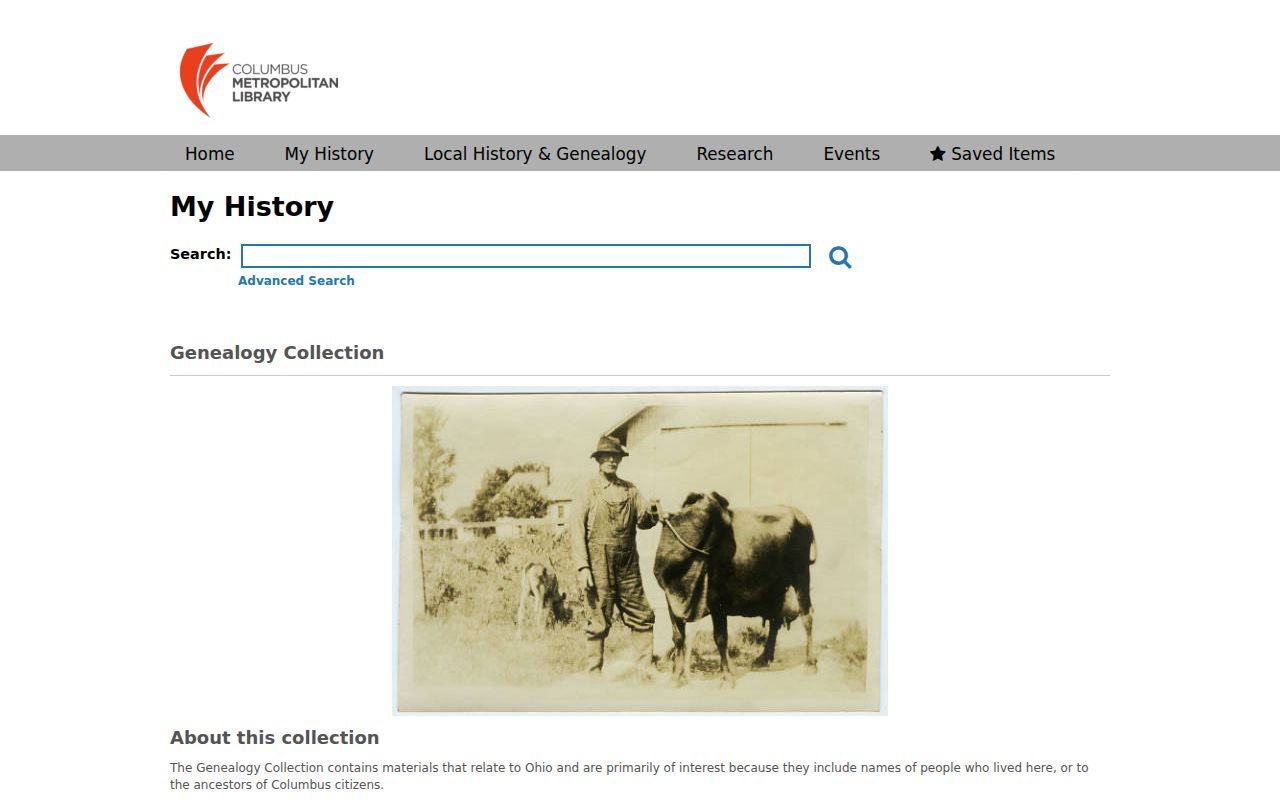
The library's digital material supports a dated reading of an address, while the Recorder remains the source for an ownership document.
Franklin County Address Change Evidence
Maps and permits can explain why an address trail shifts. CML lists Columbus Sanborn maps for 1887, 1891, 1901, 1921, and 1921–51, plus atlases from 1872, 1899, 1910, 1920, and 1937. These sources show lot and building context. They do not name occupants. For a Columbus property, BZS Citizen Access can provide address-linked permit, inspection, certificate, or code leads; BZS Records accepts an Address History request when the online route is thin. The city says plans before 2011 are unavailable under its retention schedule.
Use the Historic MLS real estate cards collection as another property-history lead, not as a roster of residents. A sale card, map, or permit can date a change to the building. A deed, directory, or census is still needed before connecting a person to the address for a specific period.
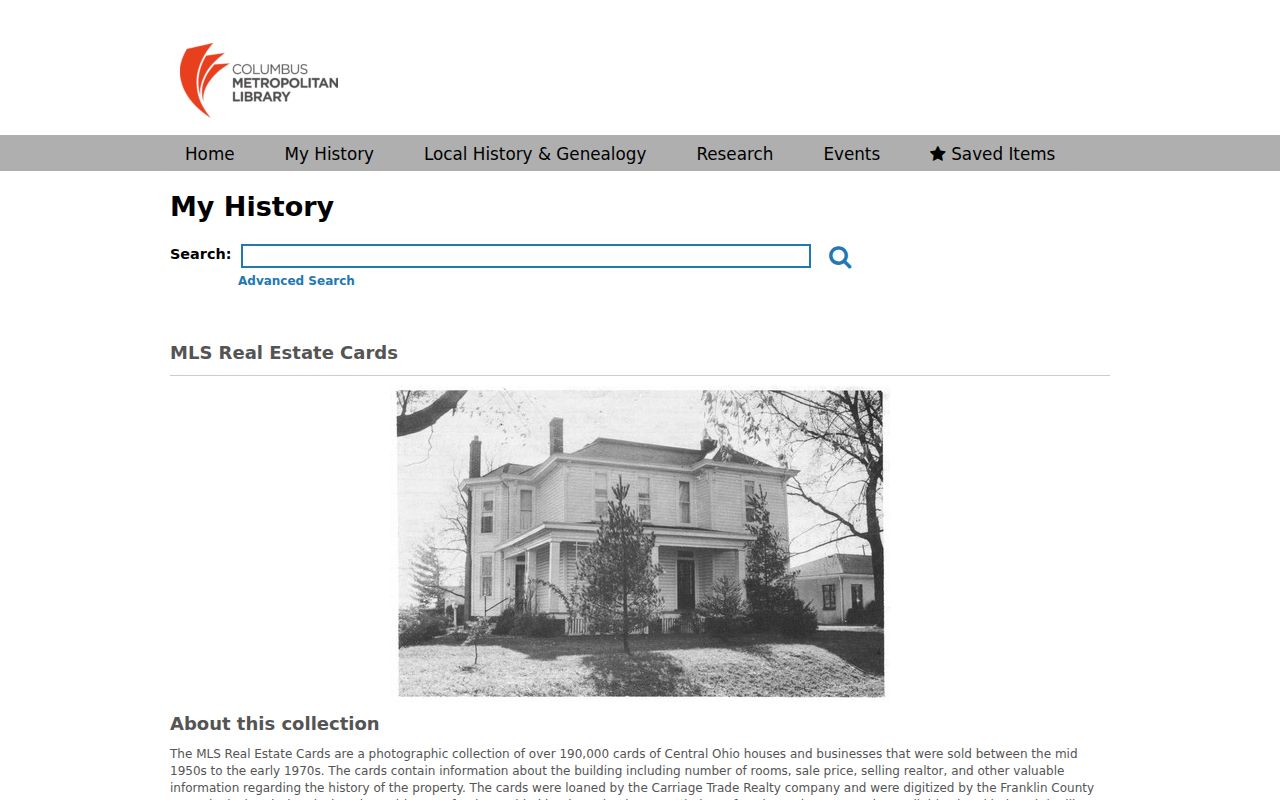
Property images can sharpen a date range, but they should stay separate from the evidence used to identify a past household.
Franklin County Records After 1879
One historical gap needs special care. The Recorder's 2017 historical-search brochure says some old records were destroyed in an 1879 fire, although most were reconstructed. It also describes the 1804–1913 deed indexes, where a researcher chooses grantor or grantee, follows a partial surname to a handwritten index page, then uses volume and page to reach the original document. An absent early online entry is not enough to say a transfer never existed.
Try spelling variants, the handwritten index, volume/page references, and the Recorder counter. Keep the fire and reconstruction in the research notes for that exact date range. Franklin County deed books date from 1803, but survival and search format can differ from book to book. The historical brochure is also the source for the regular deed-index start of January 2, 1914 and the mortgage-index start of January 7, 1970.
The brochure's old-book route is a practical fallback when an early digital result appears incomplete.
Franklin County Past Residents Research Endpoints
For a family or house-history question, the useful closing evidence is often a combination: a continuous parcel and deed trail, a directory entry for a chosen year, a census snapshot, and a map or permit record. Newspapers can add a dated notice, and Probate may hold an estate or historical vital record, but each requires identity checks against the address and period. Columbus Metropolitan Library's Local History & Genealogy staff, Main Library at 96 S. Grant Avenue, is the local fallback for missing directory, map, microfilm, and neighborhood material.
CML added digital scans of Columbus Dispatch issues from 1986 through 2018 in November 2025, supplementing its existing newspaper access. The addition is useful for a post-1985 address or name search, but an original article and date still need review before any conclusion. The Library also retains historic newspapers on microfilm. These layers help explain a house history without converting newspaper or property clues into a claim about every former resident.
Note: A dated, cited chain is more reliable than a long list of names attached to an address.
Limits on Previous Residents Searches
Public land records describe an instrument or property relationship. A directory prints an occupant for a particular publication period. A census offers a household snapshot, while permit and map records describe the place. Unlisted occupants, household members, utility customers, driver records, and protected people are not an interchangeable address list. Ohio's public-record rules also protect confidential information, including Safe at Home participant details and certain utility customer information.